Penance (Repentance)/ Ապաշխարութիւն
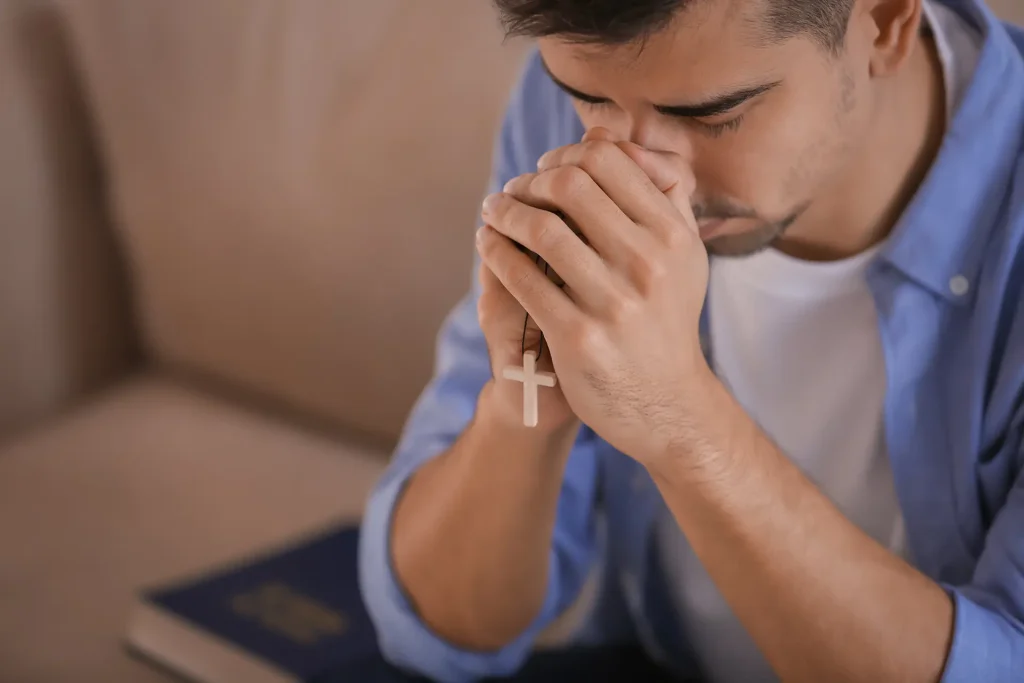
Confession and contrition are required for a believer to be freed from his/her sins committed following the days and years after being a full-fledged member of the church. The priest hears
the confession, gives the absolution in the name of the Holy Trinity, and re-instates the faithful in the Sacraments of the Church. This Sacrament is the strongest and the most personal, if the believer takes it seriously rather than as a mere formality. Sins are committed by all, every day in life. The Church allows this “limited” opportunity to have the faithful cleanse themselves
individually, from within, with the resolution not to sin again. But life has proven otherwise, there is neither “limited opportunity” nor the guarantee of “not sinning again”, therefore the church has made the allowance of repentance before the priest a life-long opportunity, who has the “authority” to bind and loose, an authority given by Christ before his Ascension and renewed by his ordination.
Sin is the leading evil before God in its manifold ways, rooted in wrong-doings, from telling lies to killing, from cursing to committing adultery. It is even the cause of illness, as seen in the
case of the paralytic. Jesus healed him saying, “Your sins are forgiven” (Matthew 9: 2), meaning that one has to be cleansed from within first, and then be restored in his health. Christ accomplished his mission for one major and eternal purpose, that is, the salvation of mankind from its daily sins. The fruit of Repentance is forgiveness, which appeared in the words of Jesus
constantly, beginning from the Lord’s Prayer, where one has to be willing to forgive the other’s wrong, so that God may forgive one’s own misdeeds. Jesus said: “If you forgive the sins of any,
they are forgiven them; if you retain the sins of any, they are retained.” (John 20: 23). We also read in the Old Testament where Prophet Jeremiah comforts his people on behalf of God, saying: “I am He who blots out your transgressions for my own sake; and I will not remember your sins.” (43: 25).
Conditions are set for proper absolution from sins, and one of them is to feel sorry and pain for what the believer has done, and then confess them willingly and never as a habit, asking God’s
forgiveness, having the church as shelter and haven for his hopes and for possible righteousness through Christ, who wiped the sins of mankind by giving his life on the Cross. As the clean water washes filthiness, so does the sincere confession which wipes away the sins of men. Prophet Ezekiel has made it all clear, when saying: “But if a wicked man turns from all his sins which he has committed, keeps all my statutes, and does what is lawful and right, he shall surely live; he shall not die; none of the transgressions which he has committed shall be remembered against him; because of the righteousness which he has done, he shall live.” (18:21-22).
Being a Sacrament, Repentance is effective only in the church and before the priest, and in extreme cases at homes for the aged or private homes, where the priest visits the infirm. The Armenian Church has set a list of most probable sins, usually committed daily by all, which are read by the confessors themselves, fully understanding the significance and the weight of those sins. In his concluding prayer, the priest absolves all the sins, the ones read and heard and those which were forgotten, giving each one, personally or collectively, forgiveness in the name of the
Father, and of the Son, and of the Holy Spirit. The theology of this Sacrament is imbedded in the Incarnation of the Word of God. His coming had the special purpose from God the Father, not to lose any of his creatures, but have them return to Him, through His Son who left his legacy on earth, his true Body, the Church as the custodian of his eternal mission, until his Second Coming.
Finally, the Armenian Church does not understand “repentance achieved under pressure, under certain conditions and in return for some punishment,” as the Roman Catholic Church maintained for centuries, which the believer must go through, as if God “claims the price” before He grants forgiveness. The Eastern churches, among them the Armenian Church, reject such condition and instead consider repentance or penance powerful enough as means for edification and guidance. Punishment of the Old Testament was replaced by love and tolerance in the New Testament, for which the leading example is the well known parable of the Prodigal Son, who experienced pain and poverty, repented, and returned willingly to his father’s home, where he was received by his father lovingly, with no punishment in sight, on the contrary with a lavish reception: “He was dead and now he is alive, he was lost and now he is found.” There is neither sign nor a message of punishment in this illustrious parable told so eloquently by Jesus Christ, making it a “gospel in the Gospels” in the New Testament.
After all, “If we walk in the light as He is in the light, we have fellowship with one another, and the blood of Jesus Christ His Son cleanses us from all sin.” (1 John 1: 7). If the blood of Jesus Christ is the ultimate healer of our sins, then any other requirement remains futile.