“The Lord has sworn and will not change his mind: ‘You are a priest forever, in the order of Melchizedek.’” — Psalm 110:4
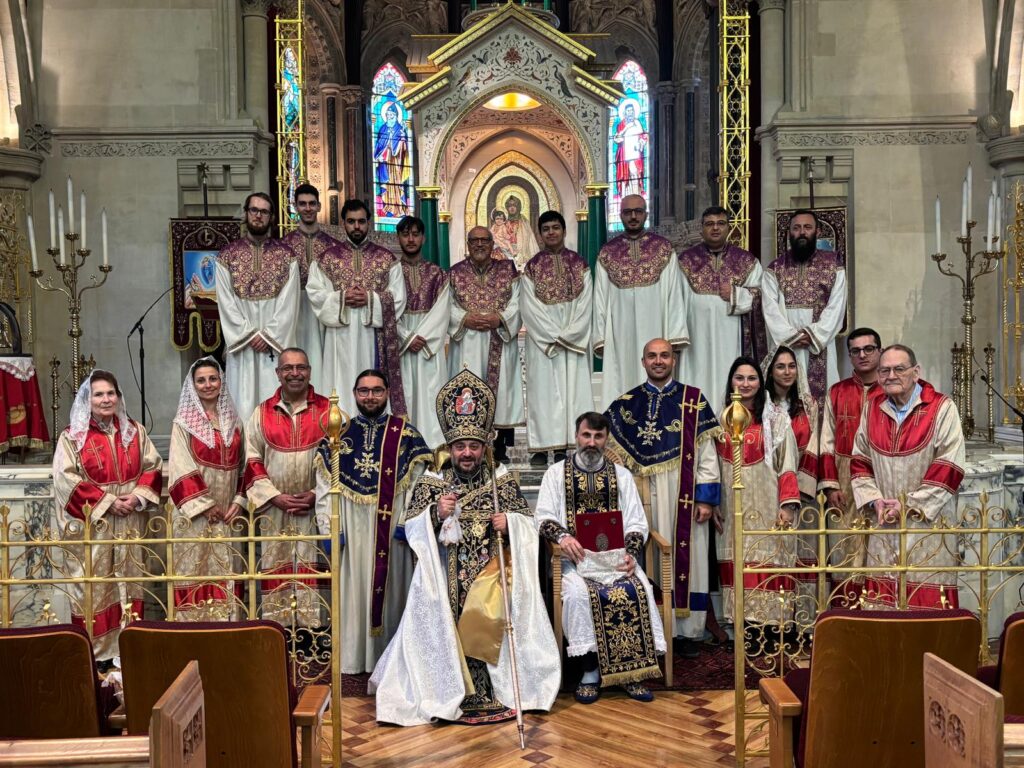
In the Old Covenant, God appointed a lineage of priesthood to minister to the people, to read the scriptures, offer incense, and teach. When Christ came, He instituted the new ordinances: the sacraments. A priest carries out these new ordinances, and deacons are appointed to minister to the people and continue the ministry of the Old Covenant. Bishops are the successors to the Apostles, and upon them rests the authority of Church leadership. In the Armenian Church, this threefold organisation is further divided into nine ranks: the first four are the ranks of the acolytate (tbir), that is, doorkeeper, reader, exorcist (one who leads the faithful in saying the renunciation of Satan), and candle-bearer; then comes the sub-deacon, who is given to wear a stole (ourar) on his left arm, and is appointed to handle the chalice and paten; the sixth rank is that of the diaconate, which is the first sacramentally ordained rank, the seventh of priesthood, and the eighth of the episcopate; the ninth and final rank is that of the Catholicos, who is the head of the Armenian Church. Men and women are understood to have different but complementary roles in the Church.